
The hidden cost of disorganization (time, money, stress)

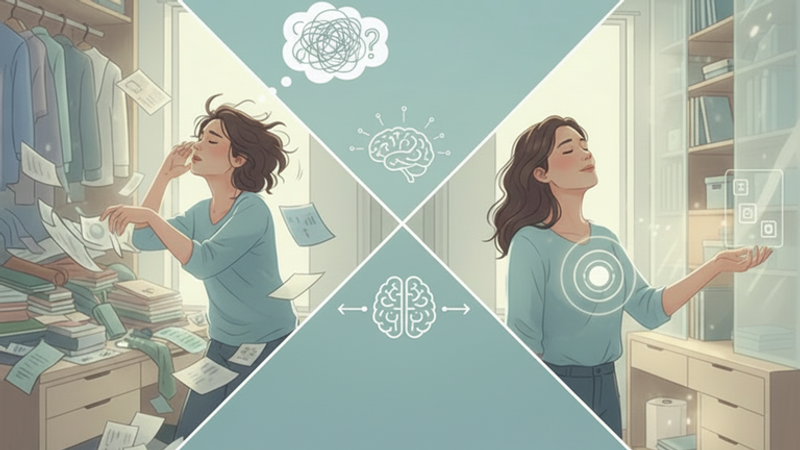
Emma didn’t think of herself as disorganized. Her home looked tidy. Things had their place. But her days told a different story.
One morning, she spent 15 minutes looking for a charger she knew she had. Later that week, she bought a new set of measuring cups—only to find the old ones in a drawer the next day. And during a weekend clean-up, she opened a storage box and thought: “I forgot I even had this.”
None of these moments felt like a big deal on their own. But together, they created something constant: A low-level stress that never fully went away.
The invisible cost
Disorganization doesn’t always look like clutter. Sometimes, it looks like:
- Searching for things you’ve already stored
- Rebuying things you already own
- Feeling slightly behind, even when everything seems “in order”
This is the hidden cost.Not just in money or time—but in mental energy.
Why it happens
Emma wasn’t doing anything wrong. She had storage. She had structure. What she didn’t have was visibility.
Her things were organized physically—but not in a way that made them easy to access mentally. So her brain tried to compensate. It kept track. It reminded. It guessed. And that constant background effort is exhausting.
The turning point
The shift didn’t come from organizing more. It came from organizing differently. Instead of focusing on where things go, she focused on: “How do I know what I have—without thinking about it?”
She started small. One shelf. One drawer. She created a simple way to see what was there without opening everything.
What changed
The difference was subtle at first. She stopped searching as much. She felt more certain when buying things.She trusted her system.
And then something bigger happened: Her mind got quieter. That constant background stress disappeared.
The real value of organization
It’s easy to think organization is about neatness. But it’s not.
It’s about:
- Reducing friction
- Removing uncertainty
- Freeing your attention
When your system works, your brain doesn’t have to.
Making it effortless
The reason most systems fail is simple: They require too much effort to maintain. What worked for Emma was something different.
A system that was:
- Quick to use
- Easy to update
- Always accessible
Tools like Asamano are designed around this idea. Not to add more structure. But to make organization feel almost invisible.
Peace of mind isn’t a luxury
It’s the result of having a system you trust. Not perfect. Just reliable. Because when you know what you have—and where it is—You stop searching.
You stop guessing.
You stop worrying.
And that changes more than you expect.