
Why Being Organized Feels So Good for the Mind

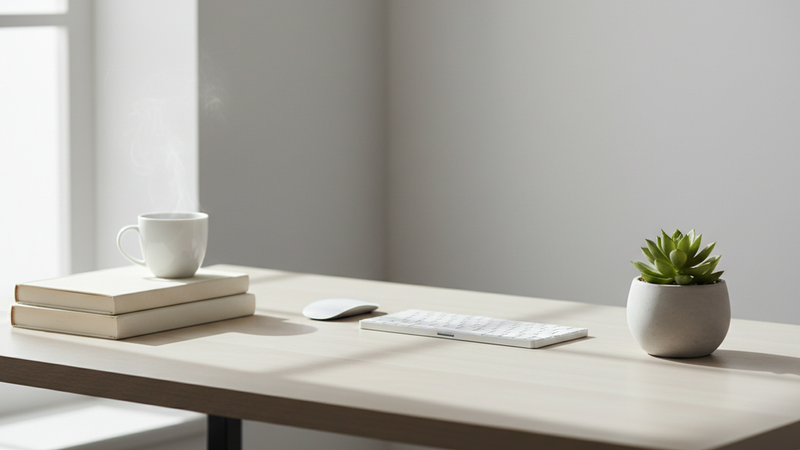
Most people think organization is mainly about keeping things tidy.
But after talking to enough people — busy parents, professionals, students, entrepreneurs — you start noticing the same pattern over and over again:
When life feels messy physically, it often feels heavier mentally too.
You walk into a cluttered room and immediately feel a little more tired.
You lose your keys and your entire morning mood changes.
You spend ten minutes looking for a charger you know you own somewhere, and suddenly your stress level jumps for no real reason.
It sounds small, but these moments add up.
Being organized is not about perfection or having a spotless home all the time. It is about removing unnecessary friction from everyday life. And when that friction disappears, your brain notices almost instantly.
Your Brain Reacts to Clutter More Than You Think
There is a reason messy environments can feel draining.
Our brains are constantly scanning what is around us, even when we are not paying attention consciously. Piles of clothes, random paperwork, overflowing drawers, things left unfinished — all of it competes for attention in the background.
Psychologists sometimes call this visual noise.
Your brain has to process all of it, filter all of it, and repeatedly remind itself what can be ignored. That takes energy.
For many women, this often connects strongly to the emotional side of everyday life. The clutter becomes part of the mental load. It creates that lingering feeling that something still needs to be handled, fixed, cleaned, sorted, or remembered.
For many men, the frustration often shows up differently. Disorder interrupts momentum. You waste time searching for tools, cables, gym gear, documents, or equipment. Small delays become constant annoyances.
Different experience — same outcome:
mental fatigue.
What Changes When Things Are in Order
Something interesting happens when your environment becomes calmer and more organized.
You breathe differently.
You think more clearly.
And everyday tasks suddenly require less effort.
You Feel More Calm
Not dramatically. Just… lighter.
That low-level background stress starts fading because your surroundings no longer feel like unfinished business.
You Feel More Capable
There is something surprisingly powerful about starting the day smoothly.
Finding your things immediately.
Knowing where important items are.
Walking into a clean workspace.
It sends a quiet signal to your brain:
“I’ve got this.”
You Stop Carrying Around Small Frustrations
A lot of stress does not come from major life problems. It comes from repeated tiny annoyances.
Looking for lost items.
Buying duplicates because you cannot find what you already own.
Being late because something disappeared again.
Organization removes hundreds of these moments over time.
The Benefits Go Far Beyond Cleanliness
People often underestimate how much organization affects focus, routines, and even health.
Better Focus
Clutter pulls attention away constantly, even if only slightly. Cleaner environments make it easier to concentrate and stay mentally present.
Less Decision Fatigue
When things have a place, your brain spends less energy processing unnecessary information.
You stop constantly asking:
“Where did I put that?”
“Do I already have one?”
“What should I move first?”
You Get Time Back
Most people lose far more time to disorganization than they realize.
Five minutes looking for keys.
Ten minutes digging through storage.
Twenty minutes reorganizing something last minute.
Over weeks and years, that becomes a significant amount of wasted energy.
You Spend Less Money
This one surprises people.
When you know what you own and where it is, you stop accidentally buying duplicates. You take better care of your belongings. Things last longer.
Organization quietly protects your finances too.
Your Environment Affects Your Stress Levels
There is actual science behind this.
Studies have shown that people who describe their homes as cluttered often have higher levels of cortisol, the body’s primary stress hormone.
And honestly, most people can feel this without reading the research.
A chaotic environment keeps your nervous system slightly on edge. Your brain interprets disorder as something unresolved.
Order does the opposite.
It creates a feeling of stability and safety.
Sleep Improves Too
This is especially noticeable in bedrooms.
When the room around you feels chaotic, your brain can struggle to fully switch off. Piles of laundry, unfinished tasks, random clutter — it all subtly reminds your mind that things are still incomplete.
A calmer space helps create a calmer transition into sleep.
Organization Supports Better Habits
When life feels less chaotic, healthy habits become easier to maintain.
You are more likely to:
- cook properly
- stick to routines
- stay active
- keep up with responsibilities
- feel mentally clear enough to focus on bigger goals
Not because organization magically fixes life — but because it removes unnecessary resistance.
It’s Not About Having a Perfect Home
This is probably the most important part.
Being organized does not mean your home has to look like a showroom.
It does not mean everything is always spotless.
Real life is messy sometimes.
The goal is simply to create systems that make everyday life easier instead of harder.
Sometimes that starts with something very small:
- one organized drawer
- a clean desk
- a better storage system
- finally sorting the pile that has been stressing you for months
Small improvements create momentum.
And often, the biggest benefit is not how the space looks.
It is how you feel when you walk into it.
At Asamano, we believe organization is really about creating more calm, clarity, and breathing room in everyday life — not chasing perfection.
Read in other languages